
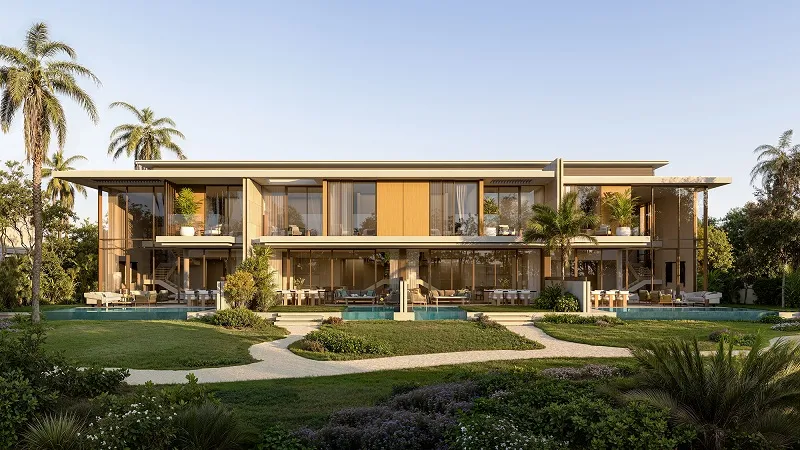
Bay Estate brings a limited collection of villas and townhouses to one of Dubai’s largest coastal development plans.
Nakheel has launched the community on Dubai Islands with around 360 homes across a site of approximately 653,709 sq m. The development includes about 2.4 km of beachfront, 6.5 km of waterfront, three residential districts, community facilities, sports areas, pedestrian spaces and a yacht marina.
The timing is important.
Dubai’s residential market remains active, but buyers are becoming more selective. H1 2026 records 80,509 residential sales worth AED 226.5 billion, making it the second-strongest first half on record by sales value, according to Engel & Völkers. Off-plan properties account for 71.3% of residential sales. Average gross rental yield across the Dubai residential market stands at 6.6%.
This creates a useful setting for Bay Estate. The project needs to compete on more than a waterfront address. Its value rests on the combination of limited residential supply, villa demand, coastal access, location and the future build-out of Dubai Islands.
Bay Estate brings villas and townhouses to a large coastal masterplan
Bay Estate is planned across three districts: Cala, Verda and Agora.
The residential mix focuses on villas and townhouses rather than high-rise apartments. This gives the project a different market position from many new Dubai launches, where apartments account for most of the available stock.
The size of the site also matters.
Around 360 homes are planned across more than 653,000 sq m. That creates a relatively low-density residential setting. The community also includes 2.4 km of beachfront and 6.5 km of waterfront, giving the coastal setting a central role in the development rather than treating it as a secondary feature.
For a buyer, this changes the type of property being considered.
Bay Estate is not competing only with other villas. It also competes with waterfront apartments, branded residences and established villa communities across Dubai. Its strongest comparison is therefore based on private space, waterfront access, location and scarcity.
What does Bay Estate offer buyers?
Current market reports describe Bay Estate as a collection of villas and townhouses arranged around private lagoon areas, with separate waterfront and beachfront villa plots also offered through the launch. Broker-reported pricing places finished homes from around AED 5.9 million, although buyers should treat these figures as indicative until the final price and terms are confirmed in the sale documentation.
Some market sources also report a 60/40 payment structure, with an estimated completion around 2031. These details come from broker and sales-material reporting rather than the public Nakheel announcement, so buyers should verify the exact unit price, payment schedule, service charges and handover terms before committing.
This distinction is important for investment analysis.
A low entry price on a brochure does not automatically create a good investment. The buyer needs to compare the price per sq ft, plot size, built-up area, payment timing and expected resale value with competing villa projects.
Dubai Islands gives Bay Estate its larger investment story
Bay Estate forms part of a much larger destination.
Dubai Islands consists of five islands covering approximately 18.6 sq km. The masterplan includes around 62,000 homes and a future population of more than 230,000 residents.
The destination also plans more than 11,000 hotel rooms and over 4,000 branded residences. Its wider infrastructure includes eight marinas, two golf courses, water transport networks, coastal parks, cycling routes and pedestrian paths.
The development adds approximately 57 km of coastline, including around 21 km of beaches, to Dubai.
These numbers explain why Bay Estate needs to be assessed at two levels.
At the property level, the buyer is purchasing a villa or townhouse.
At the district level, the buyer is taking exposure to the growth of Dubai Islands.
That second factor is important. The success of the investment depends partly on how quickly the wider destination gains roads, hospitality, retail, leisure, marine facilities and completed residential communities.
Location is one of Bay Estate’s strongest advantages
Dubai Islands sits close to the established parts of Dubai.
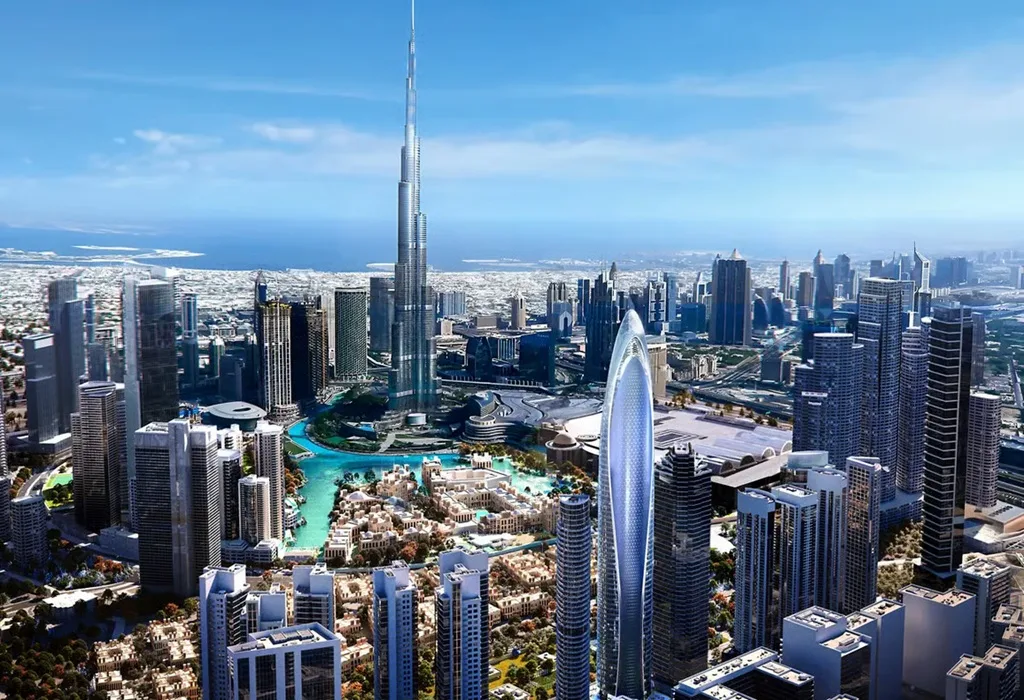
The destination is approximately 10 km from Dubai International Airport and around 15 km from Downtown Dubai. Three bridges connect the islands with mainland Dubai through the Al Shindagha Corridor.
For an end user, airport access is particularly relevant. International homeowners and frequent travellers get a coastal location without moving far from Dubai’s established urban core.
The location also gives Bay Estate a different profile from villa communities located deeper into the emirate.
However, buyers should separate existing connectivity from future infrastructure.
Dubai Islands remains under development. The long-term masterplan is large, but planned infrastructure only adds value once it is delivered and operational.
The villa format matters in Dubai’s current market
The broader Dubai market continues to show strong demand for new residential property.
Engel & Völkers records 80,509 residential transactions worth AED 226.5 billion in H1 2026. Off-plan sales account for 71.3% of activity, showing that buyers continue to allocate substantial capital to new developments.
Another DLD-based analysis shows the same underlying pattern from a different dataset. It records 56,565 off-plan sales in H1 2026, up 3.9% year on year, while ready-property sales fell sharply. Off-plan transactions represented about 71% of the residential-market total in that dataset.
For Bay Estate, this matters because the project enters a market where off-plan demand remains active.
But strong off-plan demand does not mean every launch performs equally.
Buyers increasingly compare developer reputation, location, payment plans, property size, delivery timing and resale prospects. Engel & Völkers also notes this more selective buyer behaviour in its H1 2026 report.
Bay Estate therefore needs to justify its price through the quality and scarcity of its specific product.
Waterfront scarcity is more useful than a simple luxury label
Waterfront projects often command higher prices because buyers value views, access, privacy and limited coastal land.
Bay Estate has a particularly large amount of waterfront exposure for a community with only around 360 homes.
The project includes approximately 2.4 km of beachfront and 6.5 km of waterfront.
This creates a useful investment question.
How much of the price premium comes from the actual residence, and how much comes from the waterfront position?
That distinction matters when comparing Bay Estate with other Dubai villa communities.
A buyer should compare:
- Price per sq ft
- Built-up area
- Plot size
- Waterfront or lagoon access
- Number of bedrooms
- Payment schedule
- Service charges
- Expected completion date
- Comparable resale prices
- Future competing supply
This produces a more reliable assessment than comparing headline launch prices alone.
Bay Estate faces a large future supply pipeline
Dubai Islands has an ambitious residential target of approximately 62,000 homes.
That creates both an opportunity and a risk.
More homes support population growth and help establish the district as a functioning residential destination. More supply also creates future competition for buyers and tenants.
Bay Estate’s limited number of homes gives it an advantage at the project level. But investors still need to consider the wider island supply.
A villa that looks scarce at launch does not remain equally scarce if hundreds of comparable villas enter the same market before resale.
This makes product differentiation important.
A residence with a better waterfront position, stronger layout, larger plot or better community access has a stronger basis for differentiation than a property that competes only on size.
Nakheel’s existing Dubai Islands pipeline adds context
Bay Estate is not Nakheel’s only residential development on Dubai Islands.
Nakheel already has Bay Villas and Bay Grove Residences within the wider destination. Its Dubai Islands portfolio also includes hospitality and waterfront residential projects.
Construction progress on Bay Villas shows that Dubai Islands is moving beyond a purely conceptual masterplan. Nakheel reports ongoing structural, internal finishing and infrastructure work at the project.
This is relevant to Bay Estate because neighbouring projects help establish the wider destination.
As more homes, hotels, public spaces and infrastructure become operational, Dubai Islands moves closer to functioning as a complete residential and tourism district.
For investors, that development sequence matters as much as the Bay Estate launch itself.
Is Bay Estate a good investment?
Bay Estate has several characteristics that support an investment case.
First, the residential supply is limited. Around 360 homes serve a large site, creating a lower-density format.
Second, the property type is relatively scarce. Villas and townhouses occupy a different market segment from Dubai’s large apartment pipeline.
Third, the project has substantial coastal exposure. The 2.4 km beachfront and 6.5 km waterfront give the community a strong physical differentiator.
Fourth, Dubai Islands has a large development pipeline. More infrastructure and residential activity can increase the area’s usefulness to both residents and visitors.
Fifth, the wider Dubai market continues to support off-plan demand. H1 2026 data shows that new developments remain a major part of residential transactions.
But these factors do not guarantee capital growth or rental returns.
The investment outcome depends heavily on the price paid at entry
Bay Estate versus established Dubai villa communities
Bay Estate has one major advantage over many newer villa districts: its coastal location close to central Dubai.
Its main disadvantage is development maturity.
Established villa communities already have functioning roads, schools, retail, parks and daily services. Dubai Islands is still building these systems.
This creates a clear trade-off.
Bay Estate offers exposure to a developing waterfront district with a limited villa product. Established communities offer greater certainty around the existing lifestyle and infrastructure.
The right choice depends on the buyer’s objective.
An end user who needs established schools and services immediately should assess mature communities carefully.
An investor with a longer holding period can focus more heavily on entry pricing, future infrastructure and supply.
Bay Estate at a glance
| Metric | Bay Estate |
| Developer | Nakheel |
| Location | Dubai Islands |
| Development area | ~653,709 sq m |
| Homes | ~360 |
| Property types | Villas and townhouses |
| Districts | Cala, Verda and Agora |
| Beachfront | ~2.4 km |
| Waterfront | ~6.5 km |
| Planned residents | 12,000+ |
| Marina | Yes |
| Dubai International Airport | ~10 km |
| Downtown Dubai | ~15 km |
| Dubai Islands masterplan | ~18.6 sq km |
| Planned Dubai Islands homes | ~62,000 |
Project facts above come from Nakheel’s launch information and the Emirates News Agency report.
Final assessment
Bay Estate is interesting because its investment story is tied to three different forms of scarcity.
The first is residential scarcity. Around 360 homes create a relatively limited collection.
The second is coastal scarcity. The community has around 2.4 km of beachfront and 6.5 km of waterfront.
The third is location scarcity. Dubai Islands provides a waterfront setting close to the airport and established parts of Dubai.
At the same time, the project sits inside a very large future supply pipeline. That prevents a simple “limited supply equals price growth” argument.
For investors, the key decision is the entry price relative to competing villas and the expected state of Dubai Islands at handover.
For end users, the decision is more direct: Bay Estate offers a private villa or townhouse within a large waterfront destination, with access to central Dubai and Dubai International Airport.
The project therefore deserves attention, but the strongest investment case starts with numbers rather than the waterfront label.
Bay Estate works best for buyers who understand the long-term development cycle of Dubai Islands and secure a price that reflects both the property’s scarcity and the future competition around it.

Leave a Reply